Your Health and Life Insurance just got Cheaper with No GST.
Riya Batra
September 05, 2025. 3 minute Read

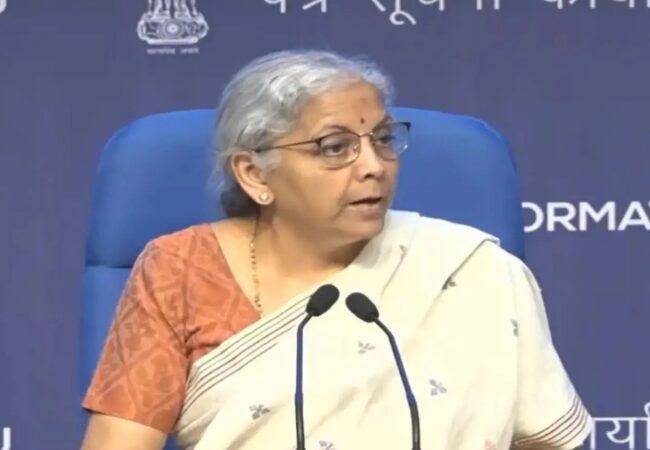
Big news from the GST Council meeting, under the leadership of Finance Minister Nirmala Sitharaman. The government has scrapped the 18% GST on life and health insurance premiums. And this reform, which will be effective from September 22, 2025, aims to make insurance affordable and accessible to Indian households.
But this isn’t just another policy tweak. It’s a landmark reform that directly reduces the financial burden on individuals and strengthens the push for financial inclusion.
So how will it affect you as an insurer? Learn all this on The One Liner.
"
In this article, we will break down the entire picture from savings on your premiums to the impact on the insurance industry, and the personal benefits for policyholders.
You’ll also find answers to common questions to help you make smarter financial decisions.
18% GST Scrapped on life and health insurance
But what does this really mean for you?
1. Positive Financial Impact For Insurance Buyers
Your premiums just got cheaper, but let's understand how.
One of the most immediate benefits of this GST exemption is the reduction in premium costs. And here is how it would help:
Previously,
A ₹50,000 premium would attract an 18% GST, totaling ₹59,000.
However, now with the GST exemption,
The same policy would now cost around ₹50,000, resulting in a direct saving of ₹9,000.
This applies to news and existing policy renewals after September 22, 2025. For instance, a three-year policy ending in 2027 will see premiums reduced starting from the next renewal after the effective date.
This also applies to various insurance plans such as:
- Term Insurance
- Health Insurance
- ULIP (Unit Linkein Insurance Plan)
- Endowment Plans, and
- Add-ons
And it’s not just for new customers; your policy renewals after September 22, 2025, are also GST-free.
2. Market Impact - on the insurance industry and sales
The recent GST exemption in Insurance is a game-changing reform for the Indian Economy, which is more tax relief; it’s a strategic move to boost insurance penetration in India.
Insurance penetration in India has been low compared to global standards. By making policies more affordable, more families can come under insurance coverage.
Financial expert Saurabh Mukherjea notes that
"
This reform is expected to positively impact sectors like insurance, FMCG, and hospitality by reducing compliance burdens and increasing consumption efficiency.
Saurabh Mukherjee, Financial expert
The recent GST exemption in Insurance is a game-changing reform for the Indian Economy, which is more tax relief; it’s a strategic move to boost insurance penetration in India.
Insurance penetration in India has been low compared to global standards. By making policies more affordable, more families can come under insurance coverage.
Financial expert Saurabh Mukherjea notes that
This aligns with GST reforms (GST 2.0) and the government’s broader vision of “Insurance for All by 2047.” For the Indian economy, it’s a catalyst – more coverage, stronger financial safety nets, and higher confidence in long-term savings and investments.
In short, this isn’t just a tax exemption—it’s a game-changing reform.
Personal Benefit - as a policyholder
Now, with the GST exemption, it definitely enhances the attractiveness of insurance as a financial planning tool.
However, here is the catch:
Now you can increase your sum assured or add useful riders like critical illness or accidental cover. This means premiums paid remain deductible under Section 80C of the Income Tax Act, and maturity benefits remain exempt under Section 10(10D).
For instance;
Existing tax benefits stay intact: Under Section 80C, premiums remain deductible up to ₹1.5 lakh. Under Section 10(10D), maturity and death benefits are tax-free (conditions apply). This combination of lower premiums and tax benefits makes insurance a compelling option for long-term financial planning.
Whether it’s an LIC policy, private insurer plan, ULIP, or endowment plan, you’re now getting better value for money. Insurance just became one of the most innovative tools in your financial planning kit.
From a Regulatory and Industry Perspective, IRDAI (Insurance Regulatory and Development Authority of India) welcomed it as a boost to financial inclusion. CBIC (Central Board of Indirect Taxes and Customs) calls it a step in simplifying GST reforms.
Reinsurance providers expect some adjustments in pricing models, but overall, you can see growth in policy adoption and industry trends.. Analysts predict a rise in market share, higher competition, and more innovative insurance products.
So, Is This Really A Game-Changer?
However, there is a long way to go!
Remember! There are many families who are above the poverty line but still have high out of pocket expenditures. In fact, we are living in times where the poorest section of the society can still visit private hospitals (because of Ayushman Bharat Scheme) but the middle class section still finds it tough to get treated in private hospitals.

Final Thought
In Conclusion
From September 22, 2025, individual life and health insurance premiums are exempt from GST. The premium cost payable is now GST-free for individual policies. Since LIC is a major insurer, its policies are also now exempt. Possibly in the long run, due to loss of ITC. But overall, you still save more than before.
Frequently Asked Questions
- Will all insurance policies be affected?
The GST exemption applies to individual life and health insurance policies. Group policies like employer-employee schemes may not be covered under this exemption (Economic Times).
- How can I benefit from this change?
To maximize benefits, consider renewing your policy after September 22, 2025, to avail of the reduced premiums. Additionally, explore options for increasing your sum assured or adding riders to enhance your coverage.
- Is GST removed from the LIC Policy?
Yes, as of September 22, 2025, GST on individuals life insurance policies including life term, ULIPs (Unit Linked Insurance Policy) and endowment policies has been removed. This applies to both new and existing policies.


Subscribe to new post
The One Liner
Useful Links
Order Related Queries
Useful Links
Order Related Queries
Trusted By |

@ 2020 The One Liner . All Rights reserved
The One Liner
Useful Links
Order Related Queries
Useful Links
Order Related Queries
Trusted By |