The Push-Pull Pattern: Exploring Our Intimacy Fears and Desires
Bipanchy Goswami
August 13, 2025. 3 minute Read
You’re messaging someone, feeling excited. You want their closeness. Then, try ghosting for two days. You seek love, but when it comes, you hesitate. This is the push-pull pattern occurring: that pesky back-and-forth in which we desire intimacy but instinctively pull away due to fear.
You extend your hand in the shortest span of time, almost instantaneously, to touch a fellow human being. And then, in the next heartbeat or a split second thereafter? You desire to pull back and create distance. This push and pull is the very reason why you witness so many individuals being trapped with the intense need to be close to others while simultaneously having an overwhelming fear of intimacy.
A person’s confusing cycle of emotional seesawing, in which one is warm and cold at the same time, is also called the push-pull pattern. It is a common problem in contemporary relationships: where people are usually attracted to the notion of closeness and intimacy but, when closeness becomes too intense and overwhelming, they feel anxious.
And hence, leading to a Push and Pull pattern in relationships.
In this article, let’s take a look at what’s actually occurring beneath the surface and why this emotional scenario is so infuriatingly familiar.
"
Learn how less is more with The One Liner.
Craving Closeness, Dodging Connection
What Is the Push-Pull Pattern?
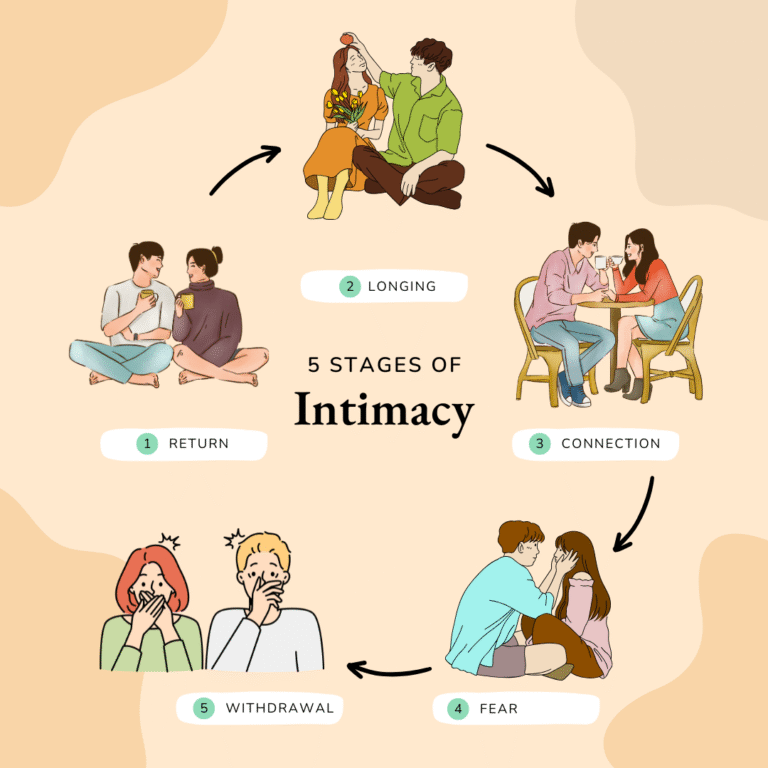
The push-pull pattern is an emotional cycle where one moment you deeply desire intimacy and the next, you back off out of fear or discomfort. It’s not just a random mood swing. It’s rooted in attachment patterns, subconscious fear, and emotional wounds that run deep.
- Feel euphoric when close to someone
- Suddenly feel smothered or exposed
- Pull back, ghost, or emotionally shut down
- Then feel regret, loneliness, and reach back out
This rollercoaster doesn’t mean you’re broken. It means your emotional system is sounding alarms from the past.
And you’re not alone. A study by the Journal of Social and Personal Relationships found that 58% of adults experience moderate to severe fear of intimacy, often without realizing it.

Why Are We So Scared of Intimacy?
Step 1: Our Fear of Intimacy Isn’t Random
Ever felt a deep pit in your stomach when someone gets too close emotionally? That’s not just a fluke. It’s often linked to how you are attached to caregivers early on in life.
Step 2: When Reassurance Becomes a Lifeline
If you’re anxiously attached, you cling to closeness, but also fear it won’t last. You constantly need reassurance, but when things feel “too good,” your anxiety spikes. You might chase love, but sabotage it when it arrives.
Step 3: Yearning Then Withdrawing
People with avoidant attachment, on the other hand, have learned to associate closeness with loss of self. As soon as a relationship deepens, they may pull away, fearing suffocation or loss of independence.
Step 4: Past Relationship Trauma
Maybe you opened up once and got hurt badly. Maybe you were cheated on, abandoned, or emotionally manipulated. Now, even a healthy relationship feels like a threat. Your nervous system doesn’t know the difference between “past” and “present.”
Step 5: Vulnerability Feels Like a Threat
Opening up can feel like handing someone a weapon they might use against you later.
This fear makes emotional safety seem dangerous, especially if it’s unfamiliar.
According to Dr. Brené Brown’s research on vulnerability, many people fear it will be met with shame or rejection. But the irony? Vulnerability is also the foundation of true intimacy.
Okay, So How Do We Break This Cycle Without Breaking Ourselves?
Let’s Get Real About What We’re Really Looking For
At our core, we’re wired for connection. It’s as essential as food, water, and air. The late psychologist Abraham Maslow even included love and belonging in his hierarchy of needs.
But this need for connection clashes with our desire for safety.
So how do we navigate the messy middle?
1. Self-Awareness Is the First Step
Name it. Call it out. Say it to yourself: “I’m pushing away because I’m scared, not because I don’t care.” Self-awareness doesn’t fix the pattern overnight, but it loosens the grip of shame.
2. Explore Your Attachment Style
Want a shortcut to self-discovery? Take an attachment style quiz. You’ll learn if you’re more avoidant, anxious, secure, or disorganized and why that matters.
3. Don’t Fix It Alone
If this cycle is wrecking your peace, therapy can help. Attachment-based or trauma-informed therapy helps unpack your blueprint of intimacy. You’re not weak for needing help. You’re human for seeking it.
4. Set Boundaries Without Guilt
Healthy intimacy isn’t about merging into someone. It’s about saying: “Here’s who I am, here’s what I need, and here’s where I end and you begin.” Boundaries aren’t walls. They’re guardrails for connection.
5. Communicate Like Your Inner Child Is Listening
Ever ghosted someone not because you didn’t care but because you cared too much and freaked out? Say that. Out loud. “I pull away when I start to care. It’s something I’m working on.” That’s more intimacy than a hundred kisses.

So, Is It All Doom and Emotional Whiplash?
Or Can We Learn to Love Better?
Yes, you can love without fear hijacking the moment. But that begins with loving the parts of you that fear love the most.
People who crave intimacy but fear it are not broken. They’re often the most self-aware, empathetic, and deeply feeling souls. They’ve just been through enough to know that closeness isn’t always safe. But healing begins when you stop blaming yourself for the tug-of-war inside you. And when you realize, you’re not alone in the push or the pull.
Related Post
Final Thought
You’re Not Too Much. You’re Just Unlearning Survival.
Every time you push someone away, it’s your nervous system trying to protect you. Every time you reach out again, it’s your heart trying to heal.
The dance between intimacy and fear is a delicate one—but it can be softened.
You don’t need to “fix” yourself. You just need to understand yourself. And that… is where real intimacy begins.
Frequently Asked Questions (FAQs)
Q1. What is the push-pull pattern in relationships?
The push-pull pattern refers to a recurring cycle where a person seeks closeness and then withdraws out of fear or discomfort, creating an emotional back-and-forth in relationships.
Q2. Is fear of intimacy common?
Yes. Research suggests that over half of adults experience fear of intimacy at some point. It often stems from past trauma, attachment styles, or vulnerability issues.
Q3. Can the push-pull pattern be changed?
Absolutely. Through self-awareness, communication, and therapy, people can work through intimacy fears and form healthier patterns of connection.
Q4. Are push-pull dynamics toxic?
They can become emotionally exhausting for both partners if unaddressed. But with understanding and effort, the dynamic can evolve into a more stable, secure connection.
Q5. Do attachment styles really impact relationships this much?
Yes. Your attachment style—whether anxious, avoidant, or secure—shapes how you bond, handle conflict, and express love. It’s foundational to how intimacy plays out.
Newer Post
Older Post
Newer Post
Older Post
Subscribe to new post
The One Liner
Useful Links
Order Related Queries
Useful Links
Order Related Queries
Trusted By |

@ 2020 The One Liner . All Rights reserved
The One Liner
Useful Links
Order Related Queries
Useful Links
Order Related Queries
Trusted By |