From Empowerment to Ego Wars: How Feminism Is Being Twisted Online?
Bipanchy Goswami
August 5, 2025. 3 minute Read
Women empowerment isn’t about putting one gender above the other. It’s about leveling the playing field so that no woman has to ask for the rights she already deserves. It’s about freedom. Freedom to choose, to lead, to live fully without judgment or barriers. Feminism, at its heart, simply demands that women be seen as equal human beings. Nothing more. Nothing less.
In 2014, Emma Watson, stepping onto the world stage not as a celebrity but as a global advocate, addressed the United Nations with a speech that didn’t just echo through the walls of that assembly hall, it echoed across generations. Here’s a powerful excerpt from that now-iconic HeForShe speech:
“I was appointed as Goodwill Ambassador for UN Women six months ago and the more I spoke about feminism, the more I realized that fighting for women’s rights has too often become synonymous with man-hating. If there’s one thing I know for certain, it is that this has to stop. Men, I would like to take this opportunity to extend your formal invitation. Gender equality is your issue too. Because to date, I’ve seen my father’s role as a parent being valued less by society, despite my need for his presence as a child, as much as my mother’s. We don’t often talk about men being imprisoned by gender stereotypes but I can see that they are, and that when they are free, things will change for women as a natural consequence. If not me, who? If not now, when?”
"
In this article let’s strip away the noise, the hashtags, and the hot takes. At the core remains one unshakable truth: Empowerment is not a trend. It’s a movement.
Stay tuned on The One Liner.
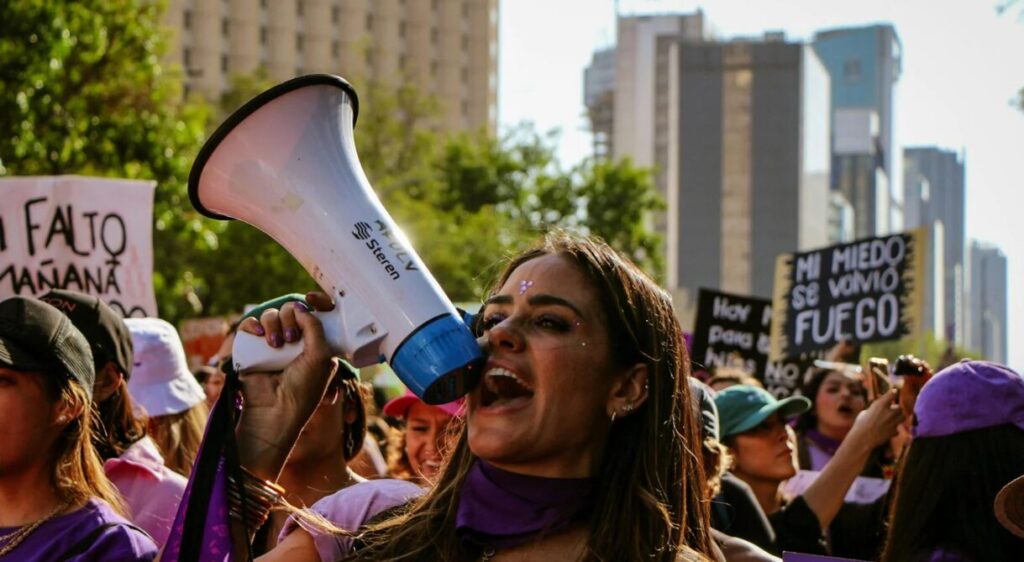
holding signs with empowering messages in Spanish. One visible sign reads "Mi miedo se volvió fuego" ("My fear turned into fire"). The atmosphere is
energetic and defiant, with participants wearing purple and standing against a backdrop of urban high-rise buildings.)
- Table of Content
- Feminism Around the World Is Being Misinterpreted
- So How To Address The Misinterpretation Around Feminism?
- The Digital Echo Chamber
- Redirecting the Feminist Movement Back to Its Roots
- The Offline Cost of Online Chaos
- The Way Forward for Digital Feminism
- Final Thought
- Frequently Asked Questions
Feminism Around the World Is Being Misinterpreted
And here’s why we think so too…
Step 1: Misinterpretation of Feminist Ideals
Many people reduce feminism to a fight against men, missing its true aim: equal rights for all genders. This warped understanding dilutes its power and turns solidarity into sides.
Step 2: Systemic Patriarchy and Gender Justice
The root issue—patriarchy—is often ignored in online debates. Instead of dismantling systems of injustice, people focus on individual blame, losing the bigger picture of true gender equity.
Step 3: Superficial Understanding of Feminist Theory
Step 4: Foster Online Extremism
When conversations lack nuance, extremes thrive. From “man-hating” to “cancel everyone,” online discourse has become a breeding ground for divisive, hostile rhetoric that alienates even potential allies.
Step 5: Focus on Gender Equity
The real goal—equity, not just equality—is lost in the noise. Feminism isn’t about treating everyone identically but ensuring everyone has what they need to thrive.
Step 6: Genuine Women’s Rights Advocacy
Amid all the drama, authentic voices pushing for real change get drowned out. Activists doing the hard work offline are overshadowed by those performing outrage for clout.
Step 7: Anti-Feminist Sentiment
Misinterpretations give fuel to anti-feminist voices. When feminism looks chaotic and exclusionary online, it’s easy for outsiders to reject it entirely—and that’s dangerous.
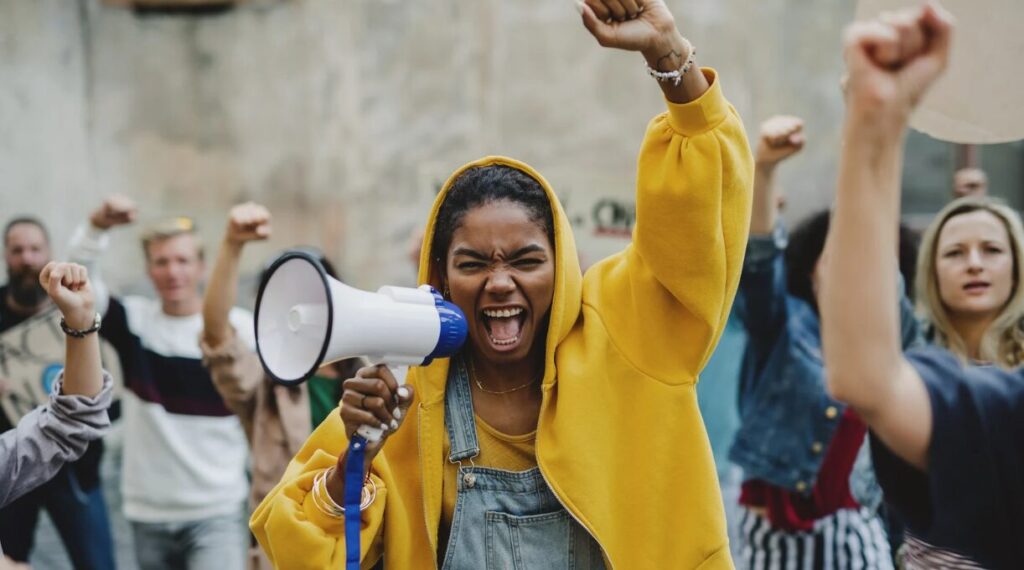
during a protest, raising her fist in the air. She is surrounded by a diverse group of demonstrators, all with raised fists, expressing solidarity and determination.
The mood is intense and empowering, capturing the spirit of activism and collective resistance.
So How To Address The Misinterpretation Around Feminism?
Step 1: Rise of “Call-Out Culture” and Internal Strife
What started as a tool for accountability now feels like public execution. Instead of correcting with care, people cancel over disagreements, creating fear and division.
Step 2: Critical Dialogue
We need to bring back respectful, thought-provoking conversations. Feminism grows not from echo chambers, but from the courage to listen, reflect, and evolve together.
Step 3: Intersectional Feminism
It’s time to practice what we preach. True feminism must honor diverse experiences—across race, gender identity, ability, and class—without gatekeeping or exclusion.
Step 4: Online Harassment
Even within feminist spaces, women—especially marginalized women—face trolling and abuse. We can’t talk about empowerment if our own communities aren’t safe and supportive.
Step 5: Feminist Activism
Let’s go beyond hashtags. Real change happens in policy-making, protests, education, and care work. Online energy needs to be redirected into meaningful offline action.
The Digital Echo Chamber
Mental Health, Relationships, and Society
Feminism’s transition into the digital world brought awareness, but also distortion. Online platforms, especially Twitter/X, Reddit, and Instagram, have created echo chambers where a superficial understanding of feminist theory can spread like wildfire.
1. Misinterpretations & Extremes
The internet isn’t known for nuance. Instead of addressing systemic patriarchy or promoting real gender justice, simplified, bite-sized slogans dominate. “Men are trash” trends louder than “equity for all.”
Many online users mistake feminism for a battle of the sexes, rather than a movement rooted in inclusion and social equity. What we now see is a warped mirror, a reflection of pain, misdirected anger, and misinformation.
Stat Check: A 2023 Pew Research study revealed that 42% of Gen Z women feel feminism on social media is becoming “too hostile” and losing touch with its core.
This extremism often triggers anti-feminist sentiment, making it even harder for genuine advocates to speak without being misunderstood or lumped into toxic narratives.
2. Call-Out Culture & The Civil War Within
“Call-out culture” was once meant to hold people accountable. But now? It often spirals into public shaming, silencing, and polarization, especially within feminist spaces themselves.
Internal Strife Among Feminists
Intersectional feminism should be the goal. Embracing the different layers of identity (race, class, ability). But what we see instead is infighting. One misstep, one different opinion, and people are exiled instead of educated.
Here’s the irony, the movement that fought to give women voices now punishes them for speaking differently.
Online harassment within feminist communities is rising particularly toward marginalized voices, trans-inclusive feminists, or anyone calling for more nuanced conversations.
It’s no longer just a fight against oppression. It’s a fight against each other.
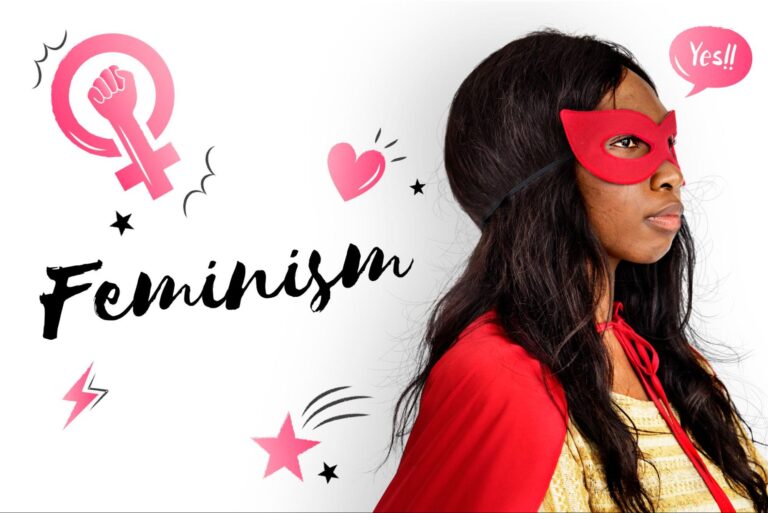
stands tall in a red mask and cape, symbolizing strength, courage, and female empowerment.
3. Ego Wars & Performance Activism
When It’s More About Being Right Than Being Real?
Activism online has become performative. It’s about clout, not cause. It’s about who has the most “woke” take, not who’s actually making a difference.
People post feminist quotes on Instagram but don’t reflect those values in real life. They debate violently in comments but avoid real dialogue offline.
The Rise of the Online Feminist Celebrity
Influencers capitalize on feminism without accountability. Brands use empowerment slogans to sell lipstick but ignore gender pay gaps.
This growing trend creates ego wars where the goal isn’t equity, but applause. Online feminism becomes a personal brand, not a political cause.
And sadly, this erodes trust in the movement itself.
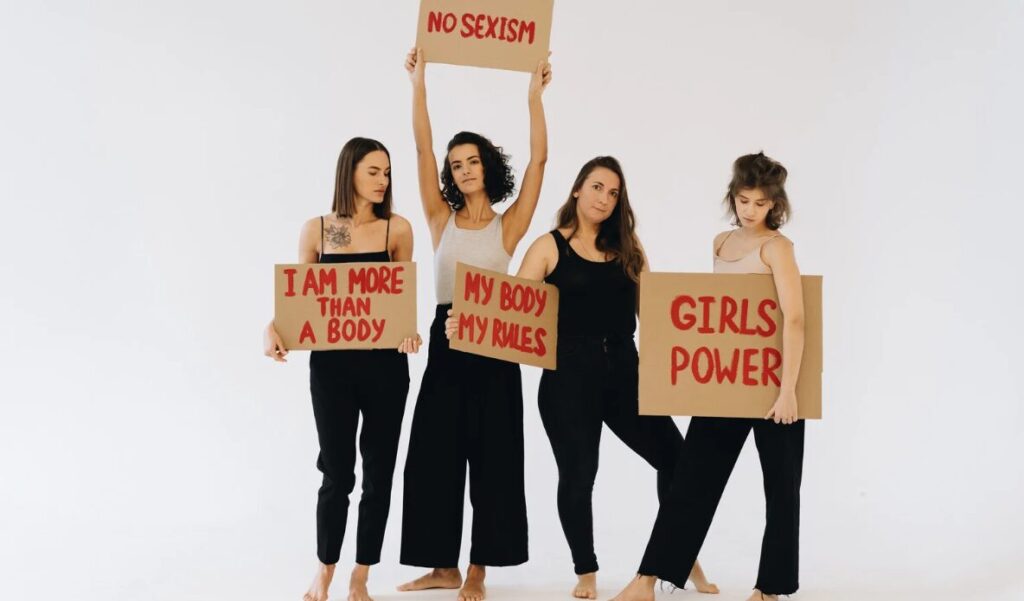
Redirecting the Feminist Movement Back to Its Roots
So how do we fix this?
We remember that feminism isn’t about winning internet debates. It’s about reclaiming power from unjust systems, not individuals. It’s about collective liberation, not personal validation.
Let’s bring it back to critical dialogue, active listening, and coalition-building. We must focus on:
- Intersectionality without exclusion
- Genuine offline activism
- Respectful disagreement and education
Online, we can build better digital feminist spaces, ones that empower instead of alienate.
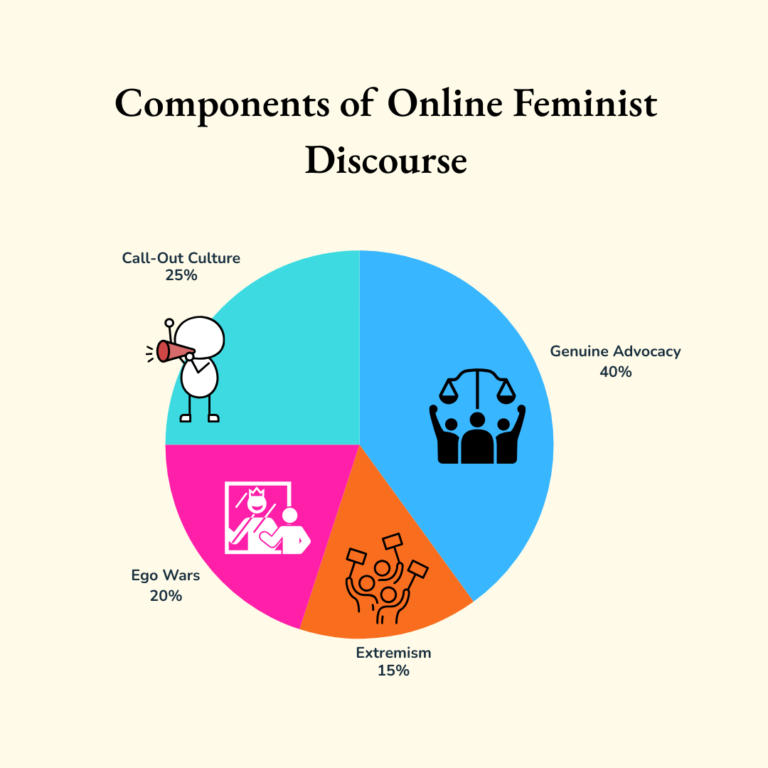
discourse: 40% genuine advocacy, 25% call-out culture, 20% ego wars, and 15% extremism.
The Offline Cost of Online Chaos
This digital distortion isn’t just a virtual problem. It affects real women, real voices.
Activists are backing out of the fight. Newcomers feel scared to ask questions. And public trust in feminism is shaky because of how it’s framed online.
The Impact on Public Perception
Many now associate feminism with being “angry,” “aggressive,” or “exclusionary.” That’s not just sad, it’s dangerous.
According to UN Women, only 24% of people globally understand feminism as gender equity—the rest think it’s “anti-men” or “too radical.”
That tells us we’ve lost the plot somewhere. And it’s time to rewrite the story.

The Way Forward for Digital Feminism
Feminism is not a trend. It’s not a tweet. And it’s not a competition.
We can and must reclaim it. That starts with intention over image, community over chaos, and action over aesthetics.
Here’s how we move forward:
- Challenge extreme rhetoric without silencing.
- Call people in, not just out.
- Normalize growth, change, and learning.
- Bring offline action back into focus.
Because feminism is too important to be lost in algorithms and arguments.
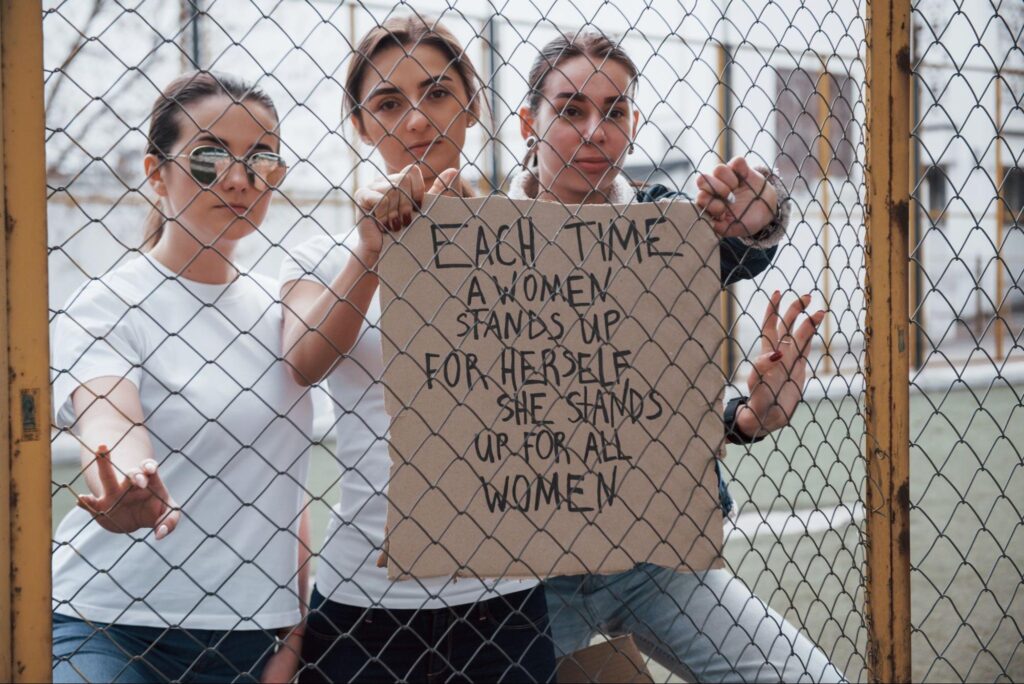

Final Thought
A Movement, Not a Megaphone!
Feminism is messy. It always has been. But that’s because it’s human. Let’s not let the internet turn it into something robotic, hostile, or hollow.
Let’s return to what it was meant to be: a bridge, not a battleground.
We don’t need more perfect feminists. We need more honest ones.
Frequently Asked Questions (FAQs)
Q1. Why is feminism being misinterpreted online?
A lack of deep understanding, viral oversimplifications, and social media’s reward for extremes contribute to the distortion of feminist ideals.
Q2. What is “call-out culture” in feminist spaces?
It’s the practice of publicly naming and shaming individuals for perceived wrongdoings, which often escalates conflict instead of fostering learning.
Q3. How do “ego wars” affect feminist discourse?
They shift the focus from collective goals to personal validation, often leading to infighting and exclusion.
Q4. Is intersectionality being respected online?
While the term is used, many spaces fail to practice true inclusion, silencing marginalized voices instead of amplifying them.


Subscribe to new post
The One Liner
Useful Links
Order Related Queries
Useful Links
Order Related Queries
Trusted By |

@ 2020 The One Liner . All Rights reserved
The One Liner
Useful Links
Order Related Queries
Useful Links
Order Related Queries
Trusted By |